Google Analytics has spent the last few years getting publicly ruled out of compliance with European privacy law. Austria, France, Italy, Denmark, Finland, Norway, and Sweden have all issued decisions ranging from “this specific deployment is non-compliant” to “fine paid”. Sweden issued a roughly €1 million fine to one company in 2023 (per Measure Mind’s roundup) for running Google Analytics on a public site.
Newer versions of Google Analytics and EU data-residency configurations have changed the picture for some deployments, but the cleaner answer for EU-facing sites is to use an analytics tool that’s GDPR-compliant by design instead of by configuration. This post covers the four open-source options I deploy for clients: Matomo, Plausible, Umami, and Ackee.
The Google Analytics baseline
Here’s what Google Analytics looks like on a typical site at the moment a parallel comparison was running:
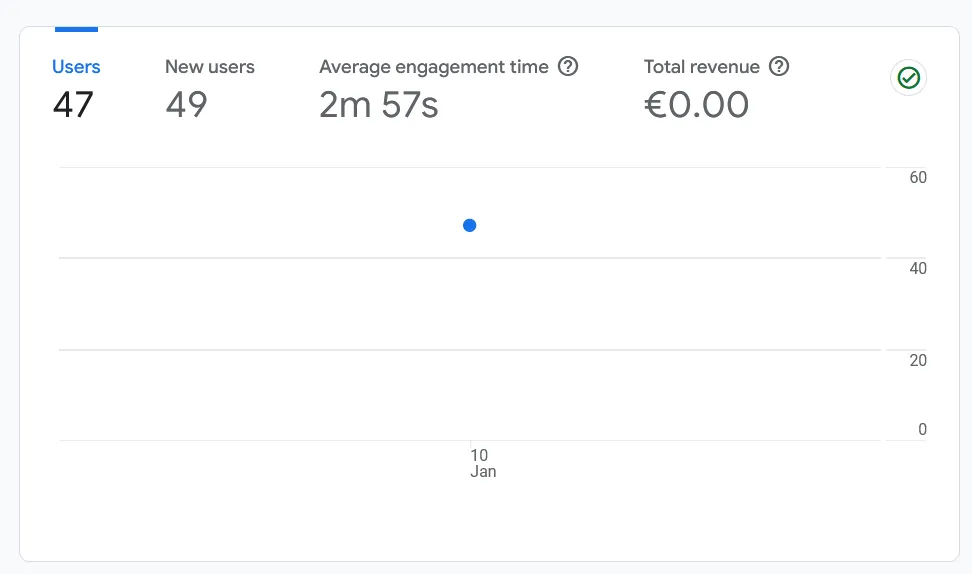
Google Analytics dashboard. The visible numbers underrepresent actual traffic, because the GA tracking script is one of the most-blocked scripts in the ad-blocker ecosystem.
The number worth noting: across the same time window, Matomo (with the same site instrumented in parallel) reported significantly more visitors than Google Analytics did. The delta is the ad-blocker tax. Roughly 30-50% of users block GA outright, and the more privacy-conscious the audience, the higher that number runs.
Matomo: the heavyweight
Matomo (formerly Piwik) is the closest open-source equivalent to Google Analytics. Same depth of reporting, same segmentation, same e-commerce tracking. The differences:
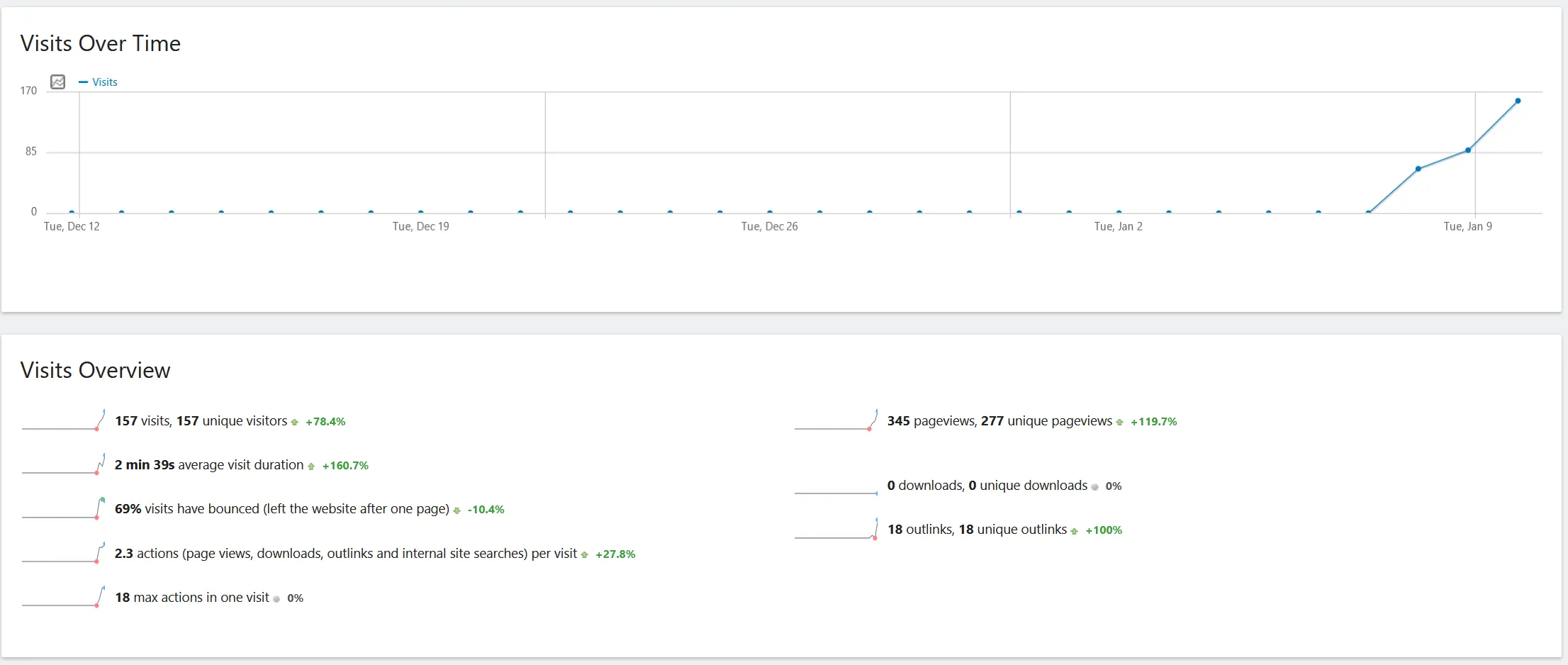
Matomo’s dashboard: dense and familiar to anyone who’s spent time in Google Analytics.
- GDPR-compliant by default. IP anonymization is on out of the box. The default configuration doesn’t require a cookie consent banner.
- Full data ownership. Self-host on your own server, the data never leaves your infrastructure.
- Same depth as GA. Goals, funnels, heatmaps (paid plugin), real-time data, custom reports, segmentation. Anyone trained on Google Analytics will find their way around Matomo in an afternoon.
- Both SaaS and self-hosted. Pay-by-usage on Matomo Cloud, or self-host the open-source version for free.
When I’d pick Matomo: agencies that genuinely use Google Analytics depth (segmentation, attribution, e-commerce funnels). E-commerce sites needing per-product analytics. Anywhere the analytics is decision-support for the business, not just a vanity dashboard.
Plausible: the lightweight
Plausible takes the opposite approach. One page, one dashboard, sub-1KB tracking script.
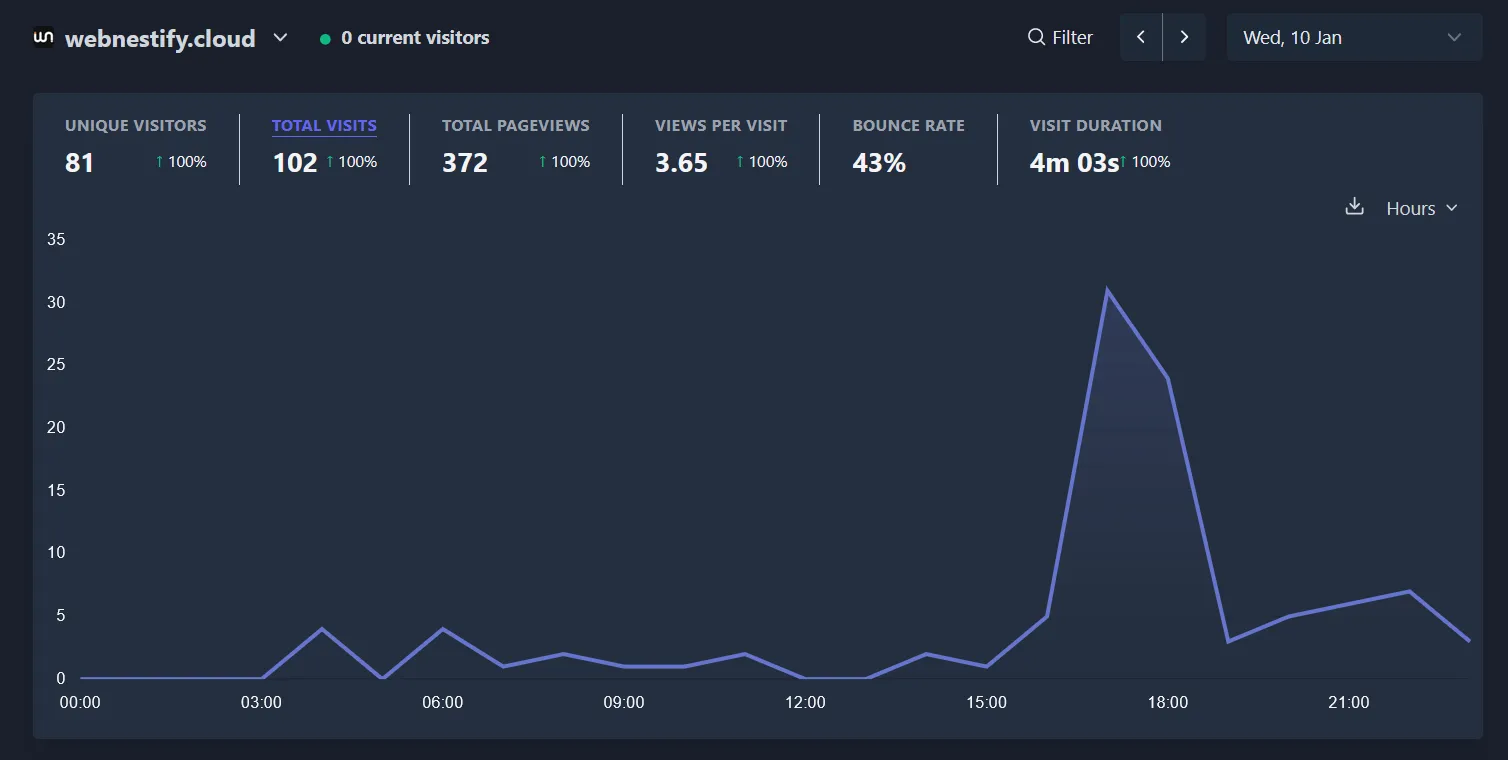
Plausible’s whole dashboard fits on one page: visitors, top pages, top sources, devices, countries. That’s the report.
- No cookies. No consent banner needed in most jurisdictions.
- Tiny script. Sub-1KB, much smaller than GA’s 50KB+ tracking bundle. Faster page loads as a side effect.
- Open-source. Hosted on Plausible’s EU servers by default, or self-host the same code.
- Single-page dashboard. What fits on one screen is the whole product.
When I’d pick Plausible: blogs, marketing sites, product landing pages. Anywhere the analytics question is “is the traffic up or down” and the team doesn’t need attribution funnels.
For the production-grade self-hosted Plausible deployment (Docker, Postgres, ClickHouse, the works), see my Plausible blueprint post, which covers the actual install and the operational decisions worth knowing.
Umami: the developer’s pick
Umami sits between Plausible and Matomo in feature density.
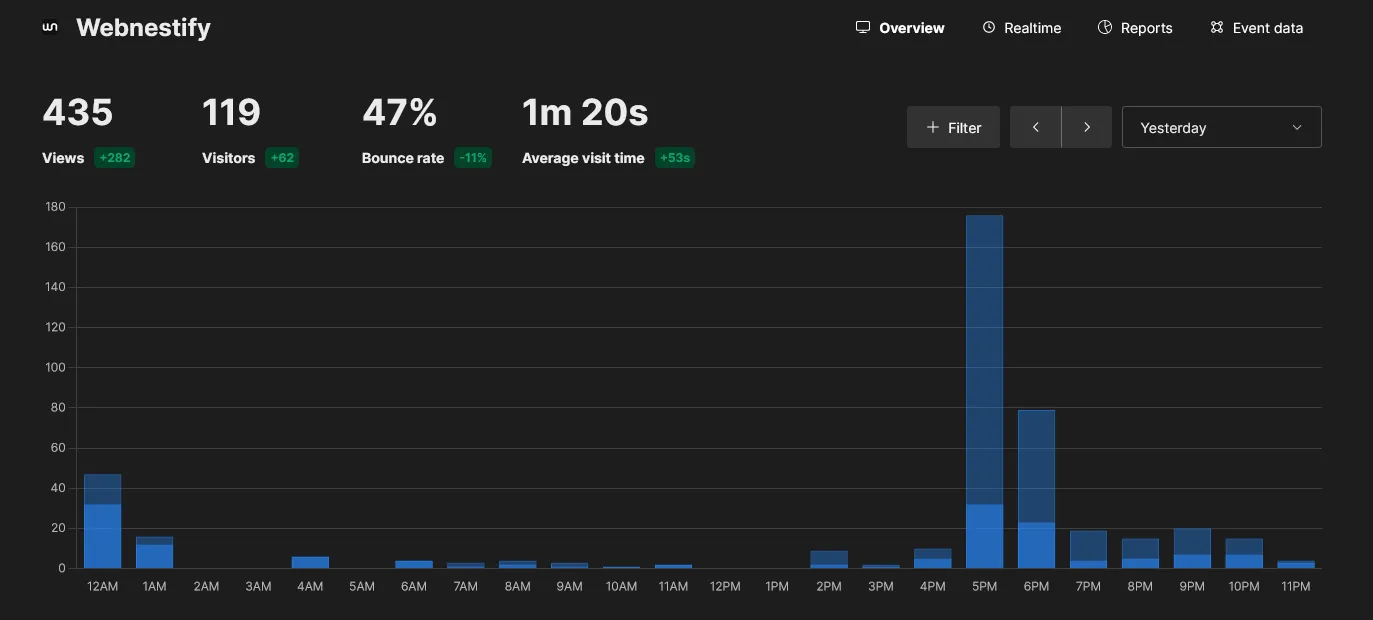
Umami’s dashboard: similar shape to Plausible’s, with an hour-by-hour view that’s useful for tracking the impact of individual posts or campaign launches.
- Cookie-free, GDPR-safe by default. Same constraint as Plausible.
- Self-hostable. First-class. Docker compose works out of the box; the deployment is well documented.
- Multi-site from one dashboard. Plausible scopes per-site by default; Umami’s UI is multi-site from the first run.
- Active development. The maintainer ships frequently, the GitHub project is healthy.
When I’d pick Umami: developers who want a Plausible-shaped tool that’s a bit more flexible, agencies tracking a portfolio of small client sites from one place, anyone who wants the hour-by-hour view by default.
Ackee: the minimalist
Ackee is the smallest of the four. Node.js, MongoDB, deliberately minimal feature set.
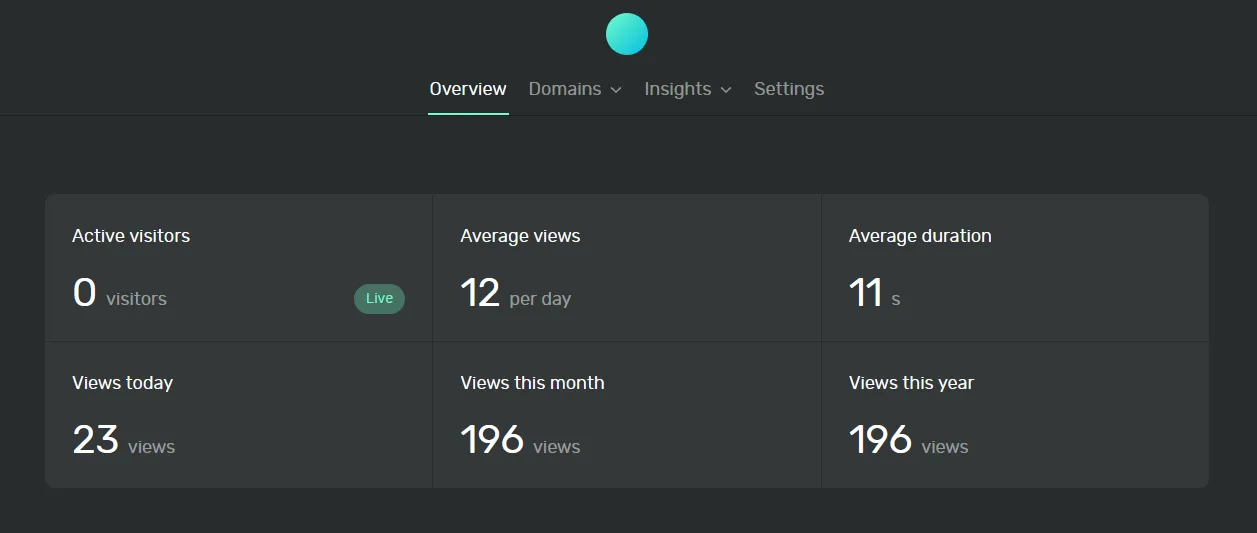
Ackee’s dashboard: the minimum viable analytics. Page views, referrers, visit duration. That’s the whole product.
- Cookie-free. GDPR-friendly by design.
- Truly minimal. If Plausible feels heavy to you, Ackee feels honest.
- Self-hosted only. No SaaS option; you run it yourself or you don’t run it.
- Smaller community. Active maintenance, but a smaller user base than the other three.
When I’d pick Ackee: small personal sites, side projects, anywhere the question is “is anyone actually visiting” and you want to know without thinking about it. The smaller community means less third-party tooling, but the trade-off is intentional.
Picking between them
A rough decision tree:
- You actually use GA’s depth (segments, funnels, e-commerce attribution): Matomo. Self-hosted on your domain to maximize ad-blocker bypass.
- You run a marketing site or blog and want headline numbers: Plausible (SaaS or self-hosted) or Umami (self-hosted).
- You manage a portfolio of small client sites: Umami self-hosted. Multi-site dashboard saves clicks.
- You want the absolute minimum surface area: Ackee self-hosted.
For all four, the self-hosted version on your own domain is the configuration that minimizes ad-blocker losses. SaaS endpoints (*.matomo.cloud, plausible.io, etc.) end up on common blocklists eventually.
Closing the loop
Google Analytics is no longer the safe default for serious EU-facing sites, and the alternatives have caught up enough that the migration isn’t a downgrade. Matomo for depth, Plausible or Umami for simplicity, Ackee for minimalism. All four self-hostable, all four GDPR-compliant, all four immune (or close to it) to ad-blockers when you run them on your own domain.
If you’re moving off Google Analytics and want the deployment done right, the Cloud Infrastructure Audit & Hardening engagement covers the analytics migration as part of the managed setup. For more open-source tooling I run for clients, the open-source solutions category has the rest.